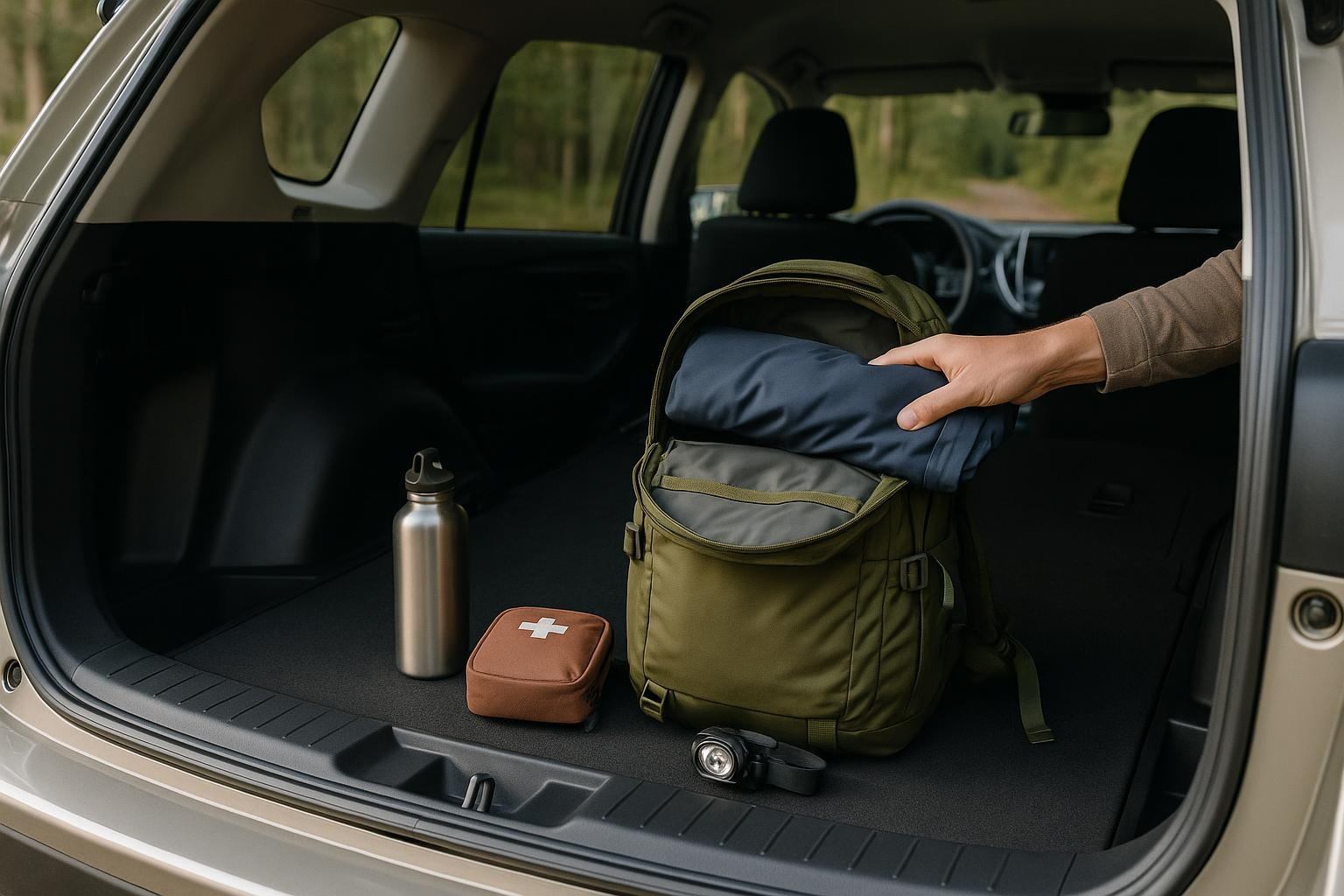
How to Build an Outdoor Kit Around Real Needs
Before an after-work hike, decide what problem you are preparing to solve: a wet layer, a dead phone, a twisted ankle or an unexpectedly slow return. That is more useful than buying a collection of vaguely capable equipment. A practical outdoor kit starts with the route, conditions and people involved, then adds items with a clear job.
Start with the trip, not the shopping list
Consider a familiar trail after work, with sunset approaching, possible rain, a low phone battery and a friend new to hiking. The answer is not automatically a larger pack. Assess exposure, navigation, communication, first aid and the consequences of delay.
Before choosing equipment, note four details: distance and terrain, expected weather, available daylight and the least convenient outcome you could reasonably face. A flat woodland path near a road needs a different setup from a remote ridge. Your companion's experience, mobility and medical needs also affect the kit.
This prevents a common mistake: treating every item as a personal preference. Water is essential on many outings. A repair tool may be unnecessary on a short walk but worthwhile when a bicycle, shelter or technical equipment could fail. Gear earns its place by solving a likely problem, not by looking rugged.
Build the core around five jobs
Most useful kits cover a small group of jobs. Carry water and a way to manage it when resupply is uncertain, plus food suited to the time outside and a margin for delays. Add a weather layer you can put on before clothing becomes soaked or chilled.
Give navigation and communication separate attention. A charged phone with the route available offline can help, but it should not be the only plan where reception may fail or the battery may drain. A simple map, small power bank and written route and emergency contact add resilience without much bulk.
Match first aid to the people and activity. For an ordinary day hike, this may mean dressings, blister care, gloves and personal medication. The pouch need not look complete; know its contents and reach them quickly. Replace used or expired supplies, and keep medication in its original, clearly identified packaging where appropriate.
Light, fire and shelter require judgment. A headlamp is often more useful than a handheld light because it leaves both hands free. An emergency layer or compact shelter can protect against a delay. Fire-starting equipment may be unsuitable in dry areas or where restrictions apply, so check current land-manager rules and local regulations before carrying or using it.
Choose materials for care, not appearance
Military-inspired gear can be practical because it emphasizes attachment points, organization and durable construction. Those features help only when they suit the trip. Extra webbing, rigid hardware and heavy fabric add weight, snag on vegetation and encourage unnecessary packing.
Choose equipment that is easy to inspect and clean. Check for grit, moisture and damage; make sure zippers move smoothly, straps lie flat without pulled stitching, and buckles and closures work. Pay particular attention when a failure could make water, insulation or navigation gear inaccessible.
Do not store damp equipment in a closed bag. Empty the pack after returning, remove debris and let fabric dry fully away from excessive heat. Wipe mud from footwear and inspect the soles for loose sections or embedded stones. Check batteries separately: a device that worked last time may be useless after sitting unused.
If an item repeatedly comes home untouched, ask whether the route, season or risk assessment has changed. Removing unnecessary gear makes the essentials easier to find.
Test the setup before the real outing
The after-work hike is a useful test because it exposes small frustrations. Put on the loaded pack and walk around the block. Can you reach the rain layer without unpacking everything? Is the headlamp easy to operate in darkness? Does a bottle leak onto clothing or electronics? Can you identify first-aid supplies quickly?
Test clothing in layers rather than relying on one heavy garment. A removable mid-layer gives you more control, while a waterproof shell helps only if you can reach it before rain becomes heavy. Check footwear with the socks you plan to wear.
Practice unfamiliar gear at home. Learn to use the map, charge the power bank, adjust the pack and open any emergency shelter. Preparation is weaker when the first attempt happens under stress, cold or poor light.
Keep one simple departure checklist
A checklist is worthwhile when it stays short enough to use. Before leaving, check:
– Route shared with a trusted person, including an expected return time
– Weather and daylight checked, with a clothing plan
– Water, food and personal medication packed
– Phone charged, route available offline and backup power considered
– First-aid supplies, light and weather protection accessible
– Footwear, pack straps, closures and batteries inspected
– Local access, fire and land-use rules checked where relevant
The expected return time gives another person a useful point at which to notice that plans have changed. If you alter the route, send an update rather than assuming the original message is enough.
Adjust the kit as conditions change
A good outdoor kit is a working system, not a permanent inventory. In hot weather, hydration and sun protection may deserve more attention. In cold or wet conditions, insulation, dry storage and an earlier turnaround decision become more important. A remote trip may justify communication equipment or extra navigation support that would be needless on a well-used local path.
Set a turnaround rule before leaving. Worsening weather, fading light, an injured companion or a route taking longer than expected can justify stopping. Emergency planning is partly about what you carry, but also about recognizing when changing the plan is sensible.
Review the kit after each outing. Note what was missing, what failed, what stayed unused and what was difficult to reach. That record will produce a smaller, more capable setup than buying from a general list. The goal is not to look prepared; it is to make ordinary decisions earlier, when they are still easy.
