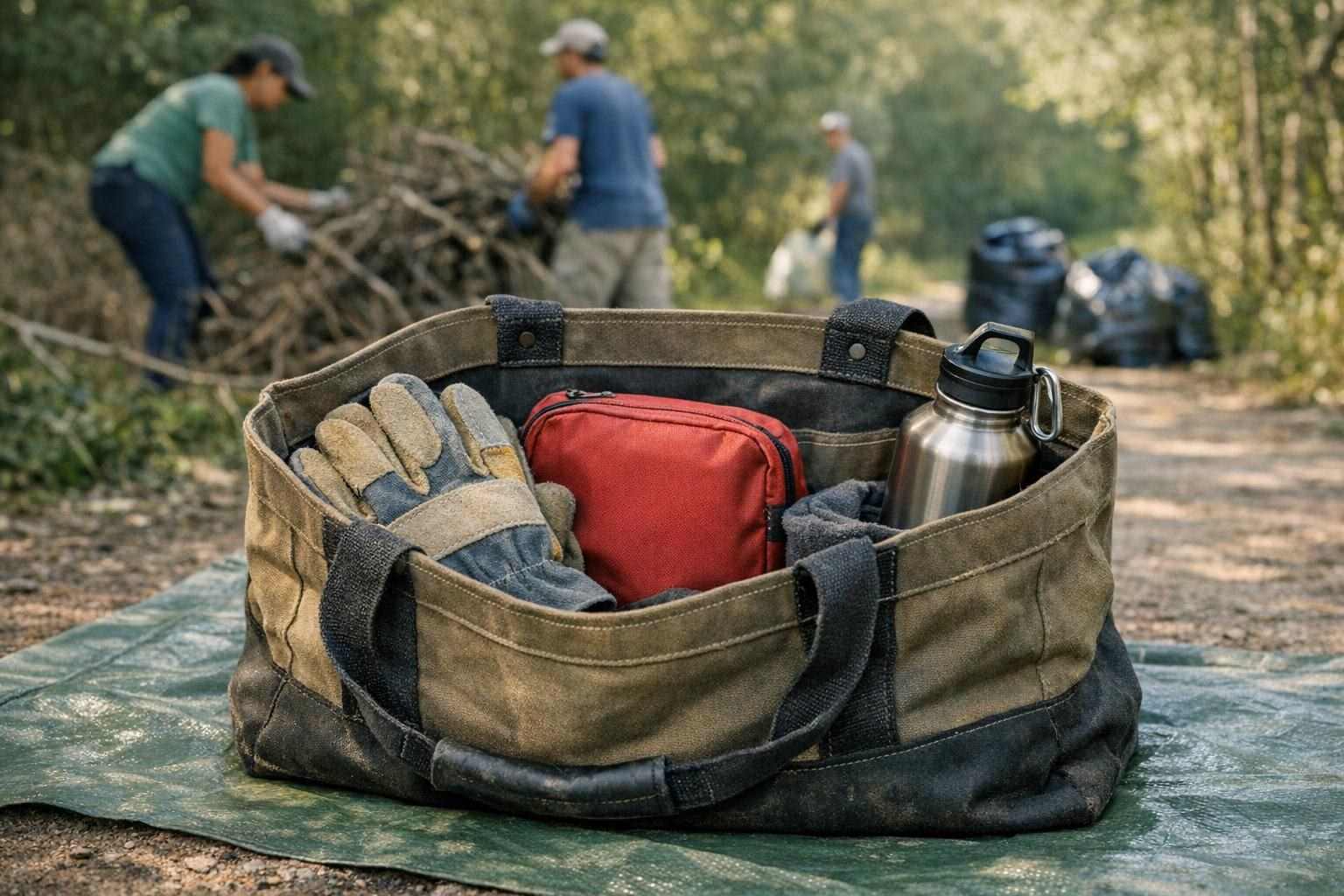
Building a Practical Volunteer Day Kit for Outdoor Community Work
Although the work of outdoor community work looks simple on paper such as clearing a trail, picking up trash for a clean-up, repairing and maintaining a community place etc., volunteers are of very different experience and clothing and often are not prepared for the sharp objects, changing weather, heavy or awkward lifting etc. that are part of many of these work sites. Thus a volunteer day kit which protects hands and feet and assists with hydration and basic first aid and keeps clean up easy is very useful.
Start with the work, not the bag
A Volunteer Day Kit should be based on the task at hand. For example, a litter pickup on a well-maintained path will require bags, grabbers, gloves, and reflective clothing; clearing brush of any size will require good eye protection, sturdy footwear, long sleeves and checking of tools before bringing them down to the site; moving soil, branches or other material will require consideration of lifting and use of different gloves to those used for sorting light rubbish.
Before packing the day kit for a volunteer work day make a list of questions relating to the work to be done. For example: What surfaces will your volunteers be crossing? Is the work to be done in the shade or is it exposed to the elements. Will they be working on muddy ground or will there be standing water about. Are they working near traffic, water, steep ground, stinging plants or broken material etc. Who is supplying the tools for the work, the disposal containers for the trash and the drinking water.
Volunteer needs for tools can vary greatly, so its best to let volunteers bring what they have and what fits. If organizers need to supply tools, keep a simple list of necessities and explain which are required and which are optional before volunteers arrive for the service day. Also let them know what is to be handed over to the supervisor and not used by volunteers.
Protect hands, feet, and eyes first
Work gloves vary from task to task. Light weight gloves for general clean up work will protect hands from grime etc. whilst tougher gloves will be required for work with rough wood, stone etc. and materials with sharp edges. Make sure that gloves fit well so that there is no restriction to finger movement. A glove that is too loose can get caught on tools etc, whilst a tight glove can cause numbness and lead to fatigue.
Pre-use inspection of the gloves should look for signs of wear to the finger tips, split seams, moisture and any damage to the coating on the palms of the gloves. Spare gloves of different sizes should be available to volunteers, so that people can be given a pair of gloves that fit well.
It's also important to ensure volunteers have proper protection for their eyes. While sunglasses are a common accessory to wear outside, it's not necessarily enough for work that includes cutting,striking, trimming or breaking material that may snap or fall apart. Include a stock of eye protectors in your volunteer kit.
Of course work can still damage long sleeves and sturdy pants but it is generally better than cut exposed arms. If the weather is going to change then add some warm layers or a waterproof jacket to the volunteers' day kits. And remember that a site in the sun can be very different to a site just a few hundred yards away that is in shade.
Pack hydration and first aid for real use
There should be easy access to hydration for the task at hand. Have all personal water bottles clearly marked with the owner's name to avoid confusion between organizers' water and volunteers'. Set up a clean and practical system to refill shared water. This may need to be restocked throughout the event depending on the remoteness of the location.
Monitor volunteers for signs of heat stress or overexertion. Stop work immediately and transport the volunteer to a cool location if they are displaying symptoms of unusual weakness, confusion, dizziness, headache or nausea. Seek appropriate medical assistance should symptoms become severe, worsen, or fail to improve within a reasonable time. Use local procedures for emergencies and always refer to current public health advice where appropriate.
A First Aid Kit should be kept in an area which is easily accessible. Contents should consist of items such as bandages, wound dressings, Band Aids, sterility wipes, wound cleansers, (assorted sizes) bandage rolls, scissors, adhesive strips, hypoallergenic tape etc. See suggested First Aid Kit list below. However this does not replace proper trained First Aid support. A note recording any volunteer's allergies, or other medical needs should be kept, providing that they have been informed of its intended use.
Make sure someone knows where the first aid kit is stored before the workday starts. A first aid kit is of little use if it can't be found in an emergency when the workday turns into an accident.
Build a cleanup station that stays organized
The cleanup station can have the following supplies grouped by type (bags, ties, etc.). Also, grabbers are very useful for cleaning up trash without having to touch it. Help volunteers sort items into ordinary trash and items that need to be collected separately for special disposal.
Never ask your volunteers to pick up unknown or suspicious items. This includes containers which may leak, needled, ammunition, suspected hazardous waste and items which may explode or give off noxious fumes. Mark the site and warn others not to touch it. Report the item(s) to the site organizer following the organizer's procedure for dealing with such items.
Tools need to be kept in one place so that you can easily account for them at the start and end of a volunteer day. You need to look for damage such as worn handles, sharp blades and moving parts that could cause injury. Tools that are damaged should not be given to volunteers to use.
Add small items that solve common problems
Sunsreen, Insect Repellent, Spare Socks, Hand Wipes, Mobile Phone and Battery Chargers, Personal ID, Whistle (and details of what it is used for). A notebook and marker for volunteers to record things such as faults with items, running short of supplies and for volunteers to record where things are that the organizer needs to go back to later.
In addition to the basic needs of volunteers listed above, pack a few protective items to help them stay comfortable. A packable rain layer, hat, sunglasses, and an extra layer for warmth will allow each volunteer to have what they need to stay dry and comfortable rather than relying on others to share worn or wet clothes. If necessary for sorting of materials, first aid, etc., bring a ground sheet or clean tarp to keep volunteers' personal bags dry and clean.
Beware of overpacking! Additional gear has the potential to hinder movement around a site and even become a hazard. Try to pack frequently used items at the top of a clearly labeled container. Sharp or dirty items such as pruning tools are best stored separately from food, clothing and first aid equipment.
Use a short safety check before work begins
Outline a short safety talk prior to distributing tools and equipment to volunteers to briefly describe the work area boundaries, where water and first aid are located, your means of communication and how they can report any injuries or safety hazards. Keep discussions brief and outline the lifting limits for your group and how they can work together to lift heavy loads or use mechanical aids to move items of an unusual size or weight.
Each volunteer should be able to speak up if they feel any discomfort, discover any safety concern or believe that they are not equipped to complete a particular task. The needs of volunteers must be considered and volunteer safety must not be compromised to complete a task. The requirements for safe volunteer work may change for each site and activity and you should therefore consult current official and local authority guidance as well as the site's landowner and your own rules.
After the service day, gather up all the tools, close up the bags, check the area to ensure everything has been put away safely, and make sure everyone has been accounted for. Clean up reusable items and make sure any wet items have been dried. Restock supplies in the first aid and cleanup containers that were used up during the service day. A practical kit is one that is ready for the next service day, not just one that has been thrown together for one day.
